Content
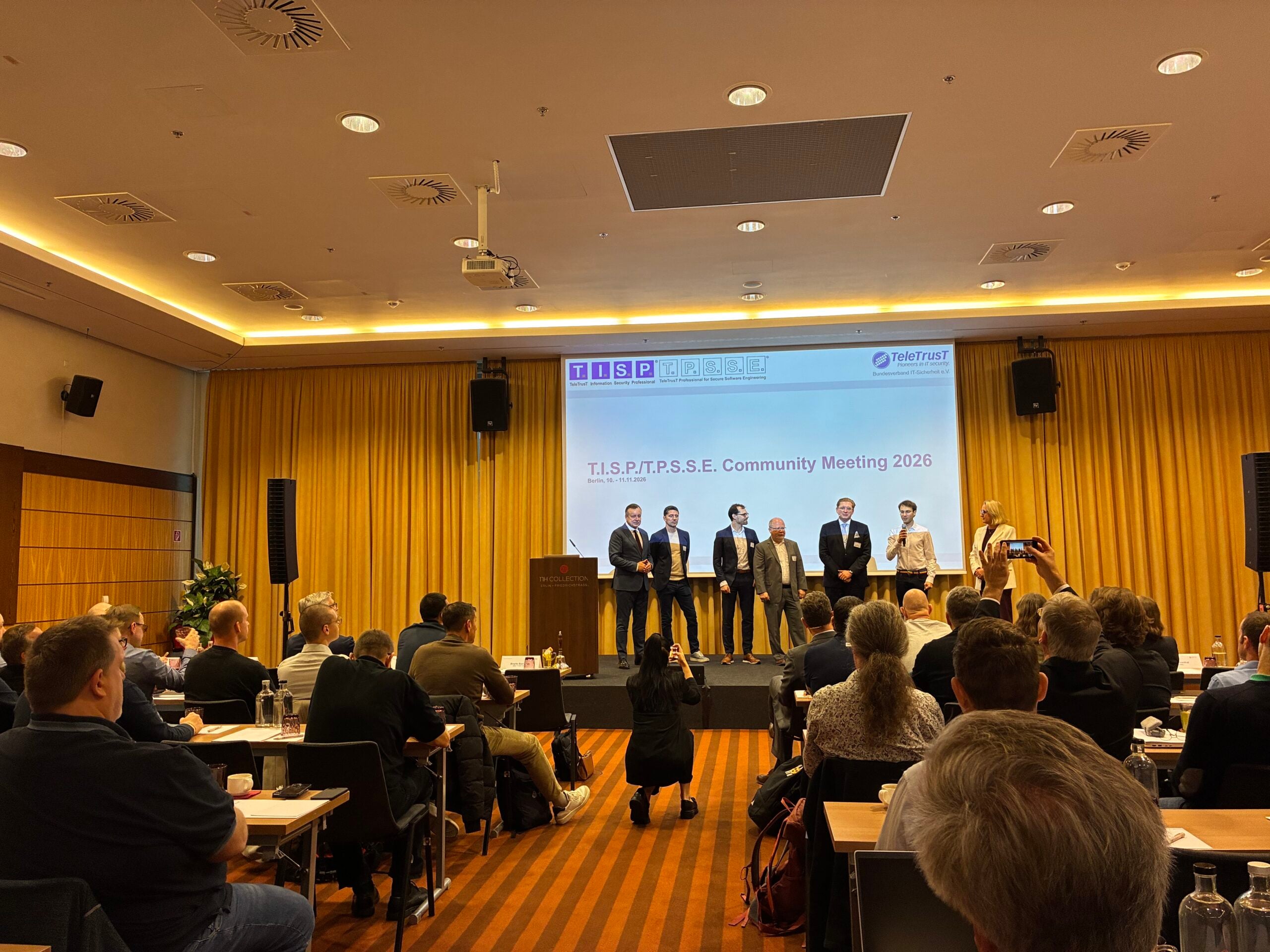
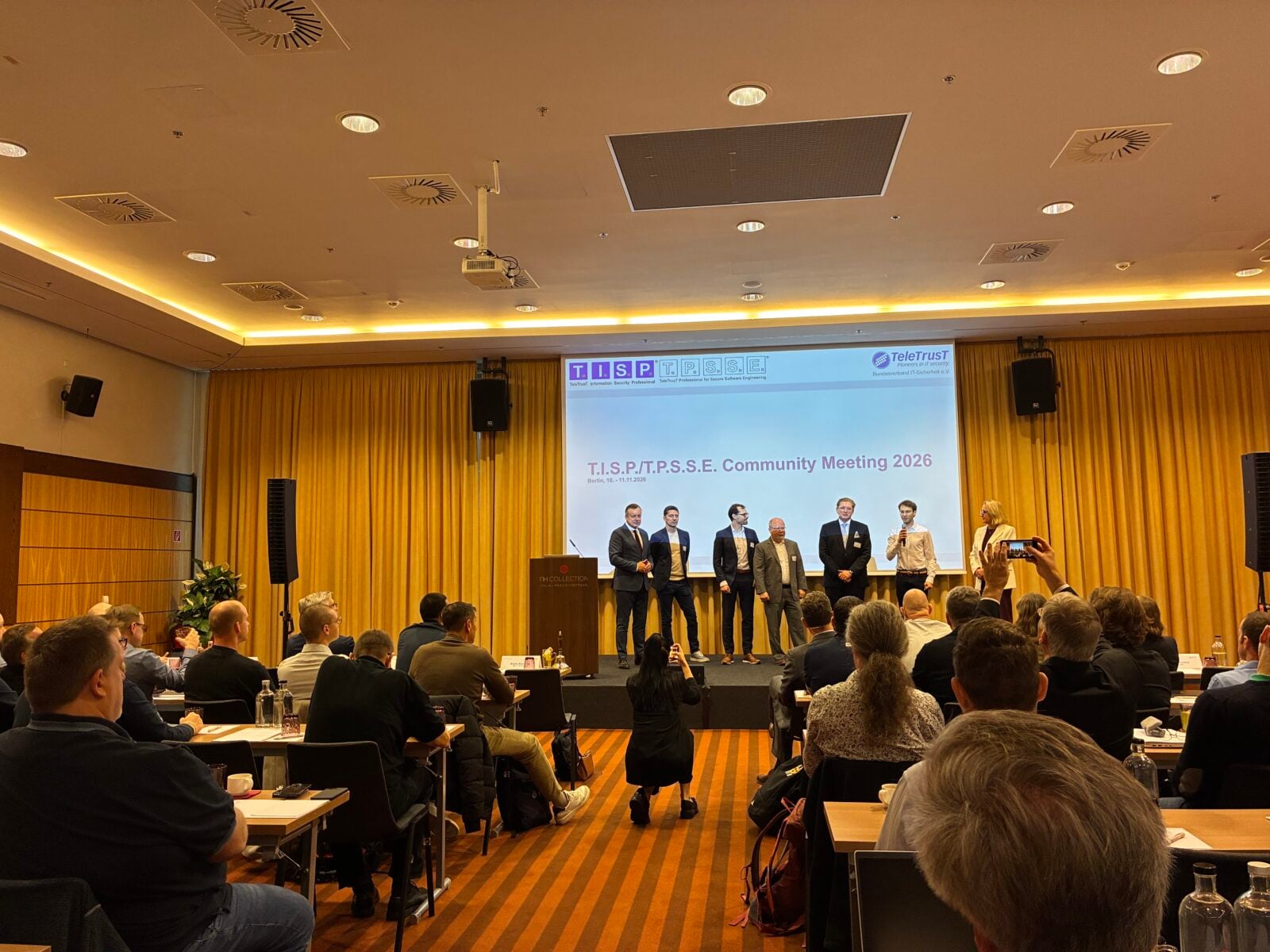
158 in-person participants, over 100 remote attendees, and two days full of insights: At the T.I.S.P./T.P.S.S.E. Community Meeting 2026, regulatory responsibility met operational security practices. For us at SECUINFRA, one question took center stage: How do requirements, technologies, and insights translate into effective cyber defense capabilities?
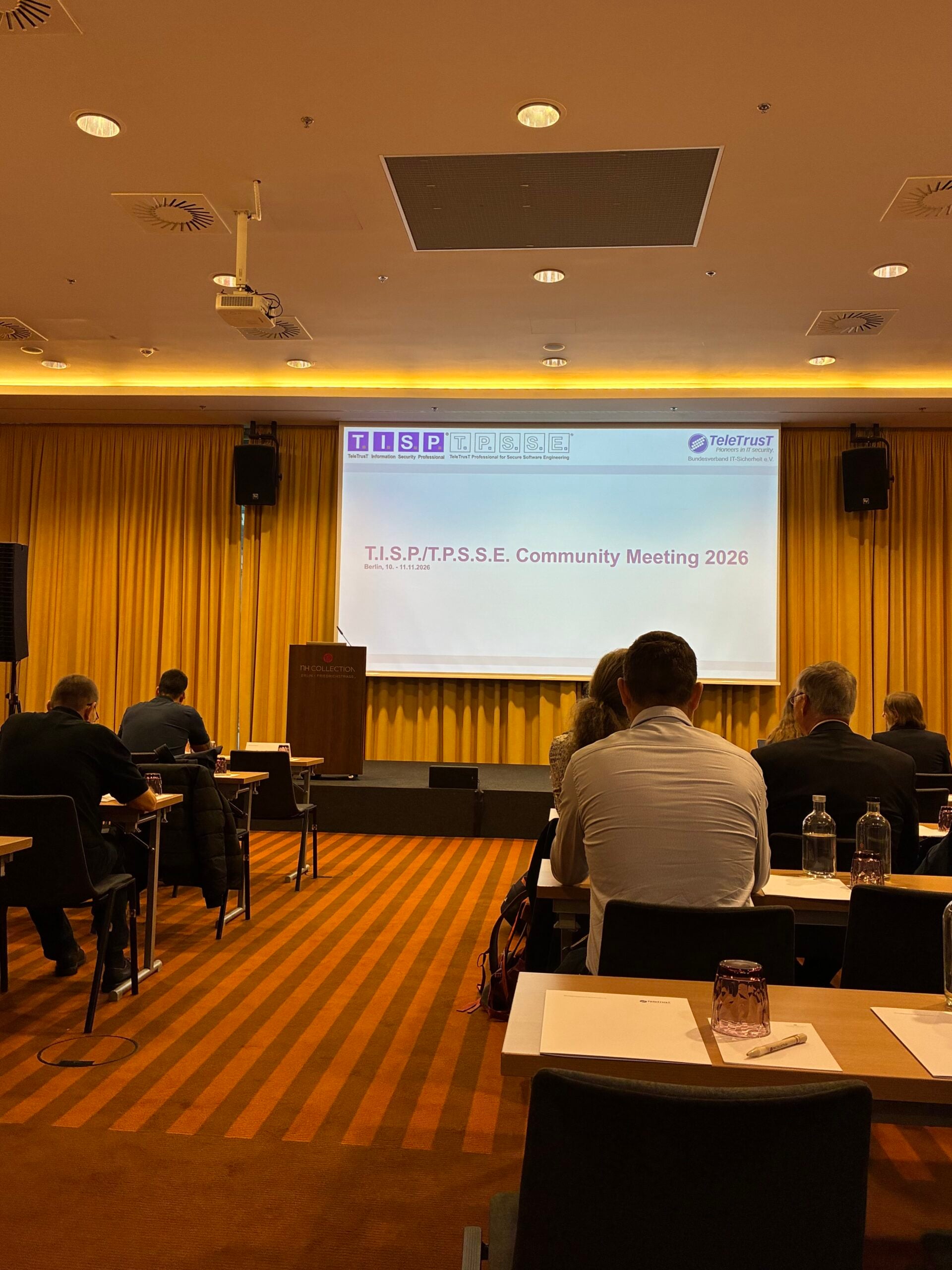
On November 10 and 11, TeleTrusT hosted this year’s Community Meeting at the NH Collection Berlin-Mitte. The event brings together certified information security experts and combines professional exchange with recognized continuing education. The perspectives represented ranged from public organizations and the BSI to insurance companies and the defense industry, as well as the business sector and research. This diversity made the exchange particularly valuable: different operational contexts came together to address common challenges.
Understanding Regulation, Shaping Security
Attorney Karsten U. Bartels kicked off the event with his update on IT security law. His remarks on NIS-2 and issues of interpretation in the BSIG underscored how crucial it is to conduct a thorough assessment of one’s own exposure and obligations. At the same time, new guidelines for executive training emphasized that cyber risks must be understood and managed at the executive level.
The Cyber Resilience Act has also brought the security of digital products into focus. The EU regulation establishes requirements for products with digital elements and the management of their vulnerabilities. Its key obligations take effect on December 11, 2027; certain reporting requirements have been in effect since September 11, 2026. As a result, security throughout the product lifecycle is becoming increasingly important for procurement and supplier management as well.
Marcel Al-Mosawi of SVA added the operational perspective: Compliance lays an important foundation. Cyber resilience emerges when companies combine it with best practices and consistent implementation. For us, this was a central theme of the event: The value of a security measure is demonstrated by the protection it actually provides in everyday operations.
Effective defense starts in the workplace
The presentations on security operations were particularly practical. Thomas Stasch discussed the detection methods and workflows of a SOC. Stefan Haibach and Philipp Rothmann from ITSG shared their experiences from the implementation of a managed SOC using an Elastic-based SIEM solution. The presentations offered valuable insights into how technology, processes, and responsibilities must work together.
Oliver Falkenthal of CCVOSSEL drew attention to an often-underestimated risk: service accounts. Excessive permissions and long-lived passwords can create significant vulnerabilities. The countermeasures discussed ranged from separate administration levels and restricted login options to automated password management using managed service accounts.
Stephan Weller’s insights into OT security at Wacker Biotech and Johannes Klick’s contribution on the external perspective on organizations also demonstrated how important complementary perspectives are. Publicly available information and insights from the dark web can reveal risks that internal analyses alone might overlook.
Security Requires a Willingness to Change
Nicole Adloff and Alexandra Palandrani from Securenication made it clear why “security by design” is also a communication challenge. Development, information security, and management pursue different goals. Secure solutions emerge when these perspectives are brought together early on. Kai Jendrian’s presentation on information security beyond established ways of thinking complemented this discussion.
Silas Borgmeier of AWARE7 demonstrated that change can be shaped in concrete terms by detailing the roughly one-and-a-half-year journey toward greater cloud independence. Alternatives such as OpenProject, BookStack, and Nextcloud Talk illustrated the possibilities. At the same time, it became clear that digital sovereignty requires a careful migration across numerous interconnected services.
AI: Jointly Developing Defense Capabilities and Responsibility
AI was a cross-cutting theme throughout both days: from the Model Context Protocol in Thomas Hemker’s presentation to prompt hacking in Marco Di Filippo’s talk, and on to shadow AI and data leakage in Aurea Kindshofer’s presentation. For us, this crystallized into a clear call to action: Companies should harness the potential of AI for their cyber defense while simultaneously establishing binding rules for its secure use. A culture of AI in practice, clear responsibilities, and systematic AI management go hand in hand.
Felix Rosbach expanded on the human dimension by addressing psychological safety, whistleblower protection, and phishing awareness. Technical safeguards become more effective when employees can address concerns and potential incidents early on.
We’re taking valuable insights from Berlin back with us for cyber defense that combines regulatory responsibility, operational effectiveness, and corporate culture. We would like to thank TeleTrusT, the speakers, and the entire community for two intensive days filled with expert knowledge and open discussions. This exchange reinforces what organizations need today: the ability to assess risks thoroughly and take effective action when it counts most.